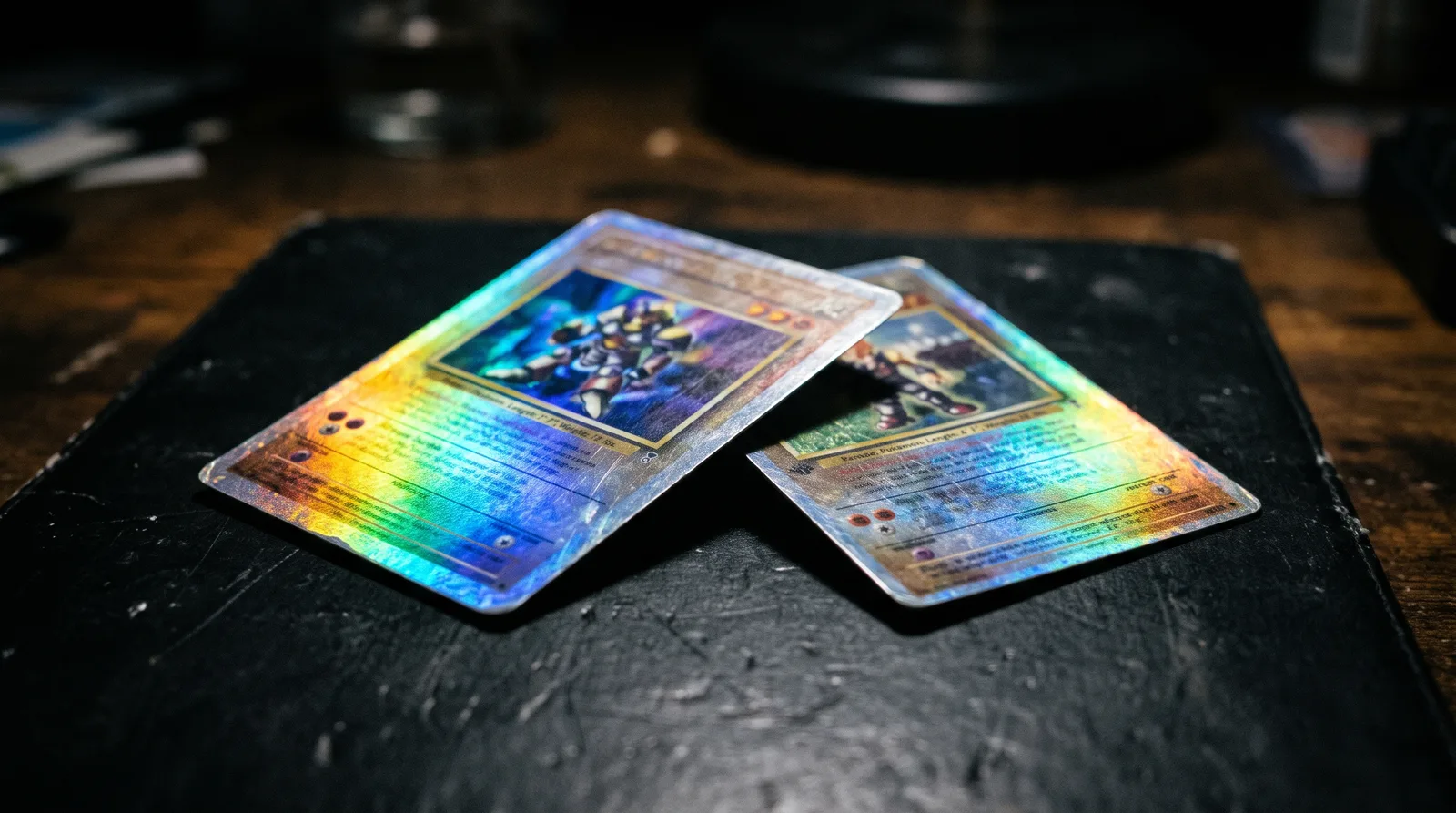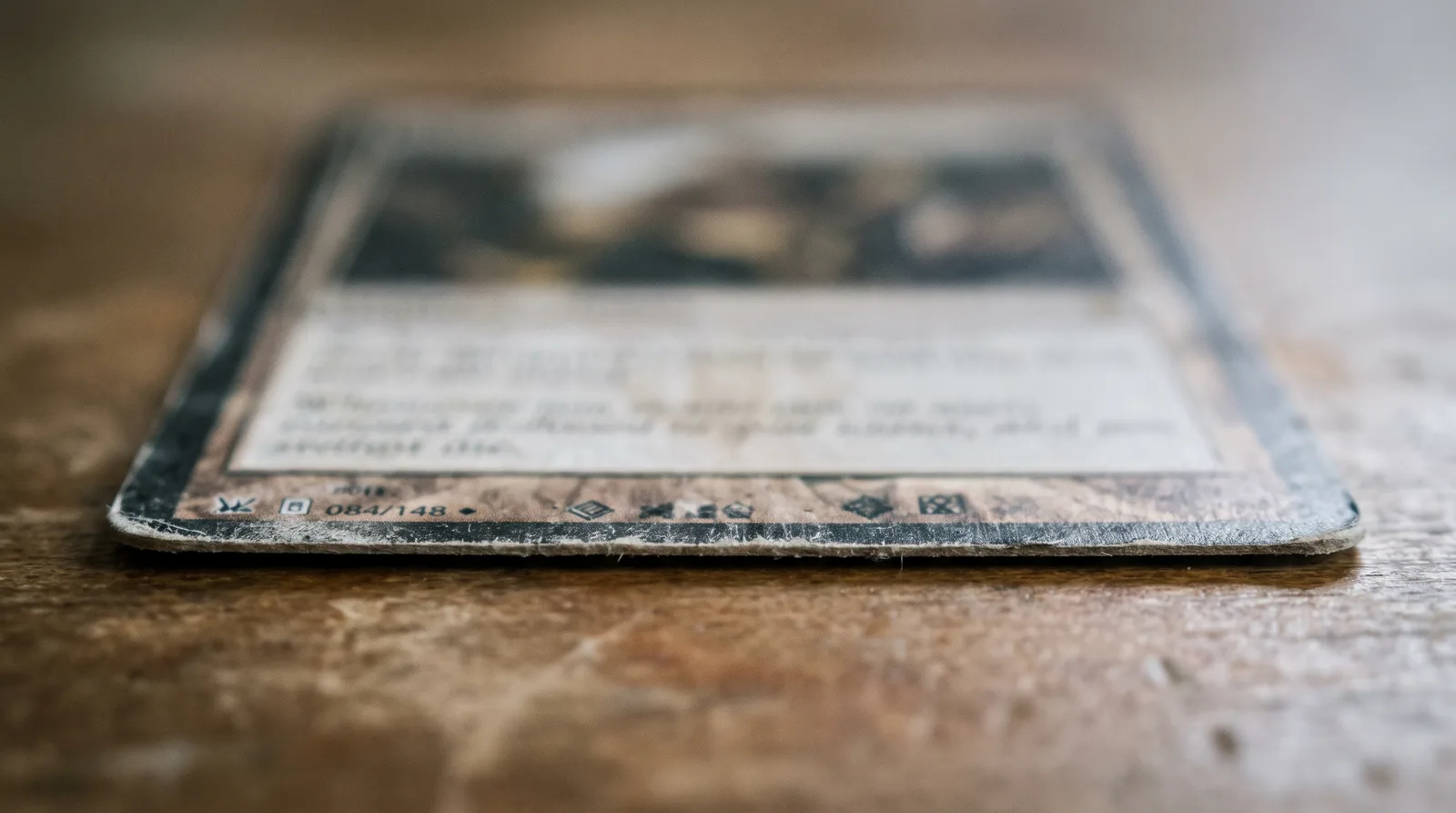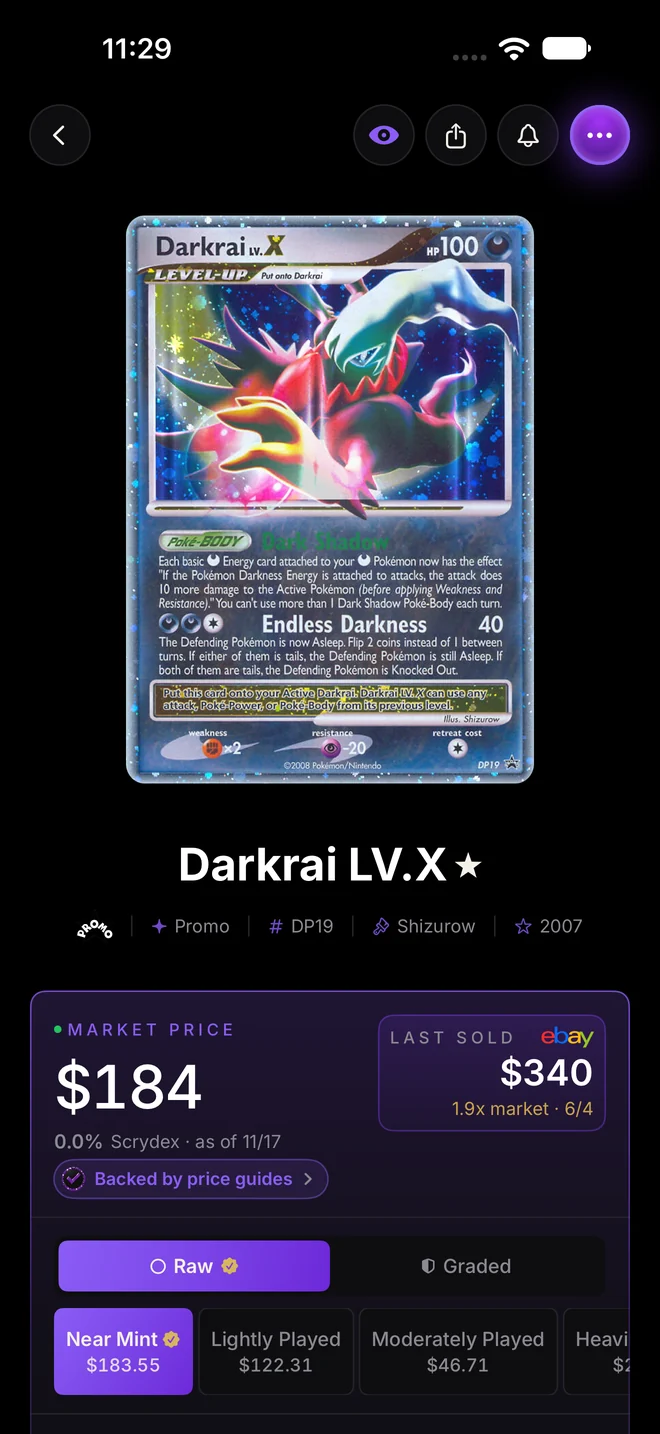
Pokémon card condition is graded on five steps: Near Mint, Lightly Played, Moderately Played, Heavily Played and Damaged. Each step down cuts the price, often by a third or more. Learning to judge it honestly is the single most useful skill when buying or selling raw cards.
Why condition matters so much
Here is the same card at every condition. Base Set Blastoise, Unlimited Holo, and Neo Genesis Lugia, Unlimited Holo, as of November 18, 2026:
| Condition | Blastoise | Lugia |
|---|---|---|
| Near Mint (NM) | $234 | $513 |
| Lightly Played (LP) | $139 | $483 |
| Moderately Played (MP) | $86 | $305 |
| Heavily Played (HP) | $60 | $224 |
| Damaged (DMG) | $42 | $164 |
A Near Mint Blastoise is worth more than five Damaged ones. The steps are not the same size on every card, but the direction never changes.
How to check a card
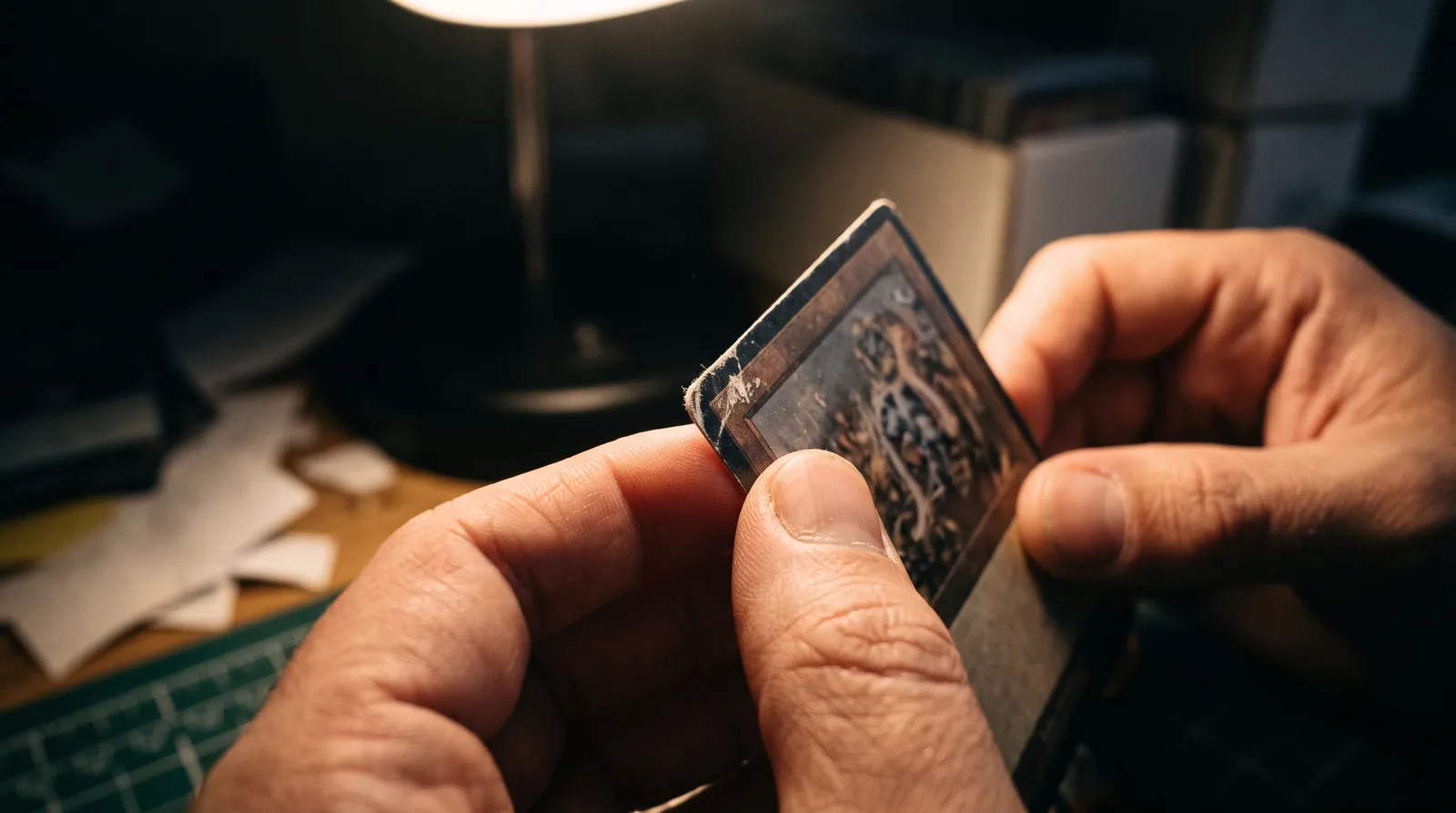
Use a bright light and tilt the card slowly. Check in this order:
- Corners. Are all four sharp? Any rounding or white showing on the back corners?
- Edges. Look at the back. White specks along the blue border are called whitening, and they are the most common wear.
- Surface. Tilt the front under the light. Look for scratches, scuffs, dents and print lines, especially on holo foil.
- Creases and bends. Hold the card flat at eye level. Any bend or crease moves it down several steps at once.
- Stains, writing or water damage. These usually mean Damaged.
The five conditions
Near Mint (NM)
Looks almost untouched. A tiny white speck or two on the back edges at most, sharp corners, no scratches you notice at arm's length. Most cards pulled from a pack and sleeved straight away are Near Mint.
Lightly Played (LP)
Small, visible wear. A little whitening along edges, slightly soft corners, or light scratches on the surface. No bends or creases.
Moderately Played (MP)
Clear wear all over. Noticeable whitening, worn corners, scuffing, maybe a minor crease that does not break the surface. Still a nice card in a binder, but obviously used.
Heavily Played (HP)
Major wear. Heavy whitening, rounded corners, creases, surface damage. The card is intact and readable.
Damaged (DMG)
Torn, written on, water damaged, heavily creased or missing pieces. Some rare cards are still worth real money even here, but buyers pay for the card's identity, not its looks.
The common mistakes
- Calling a pack-fresh card Near Mint without checking. Factory issues like off-center printing and print lines count. A card can come out of a pack below Near Mint.
- Checking only the front. Most wear shows on the back.
- Judging under dim light. Scratches on holo foil only show when the light hits them.
- Ignoring centering. Centering does not change the raw condition grade on most marketplaces, but it changes what a card can grade, and therefore what buyers will pay. A well-centered Near Mint copy often sells above an off-center one.
Raw condition and graded grades
Raw conditions and grading company numbers are different systems. As a rough guide, a true Near Mint card is where PSA 8 to 10 candidates come from. Lightly Played cards usually land around PSA 5 to 7. Our PSA grading scale guide explains each number.

When you add a raw card to Masterball, you pick its condition and the price follows: a Lightly Played card is valued as Lightly Played, not Near Mint. It keeps your collection value honest.
Buying and selling by condition
When selling, describe the worst flaw clearly and show it in photos. Buyers forgive wear they were told about. They do not forgive wear they find themselves.
When buying, ask for photos of the back and of each corner. If a seller will not send them, assume the card is a step lower than listed. Then compare the price to sales of that condition, not to Near Mint. Our guide to what your card is worth covers the rest, and how to store cards keeps them in the condition you bought them in.