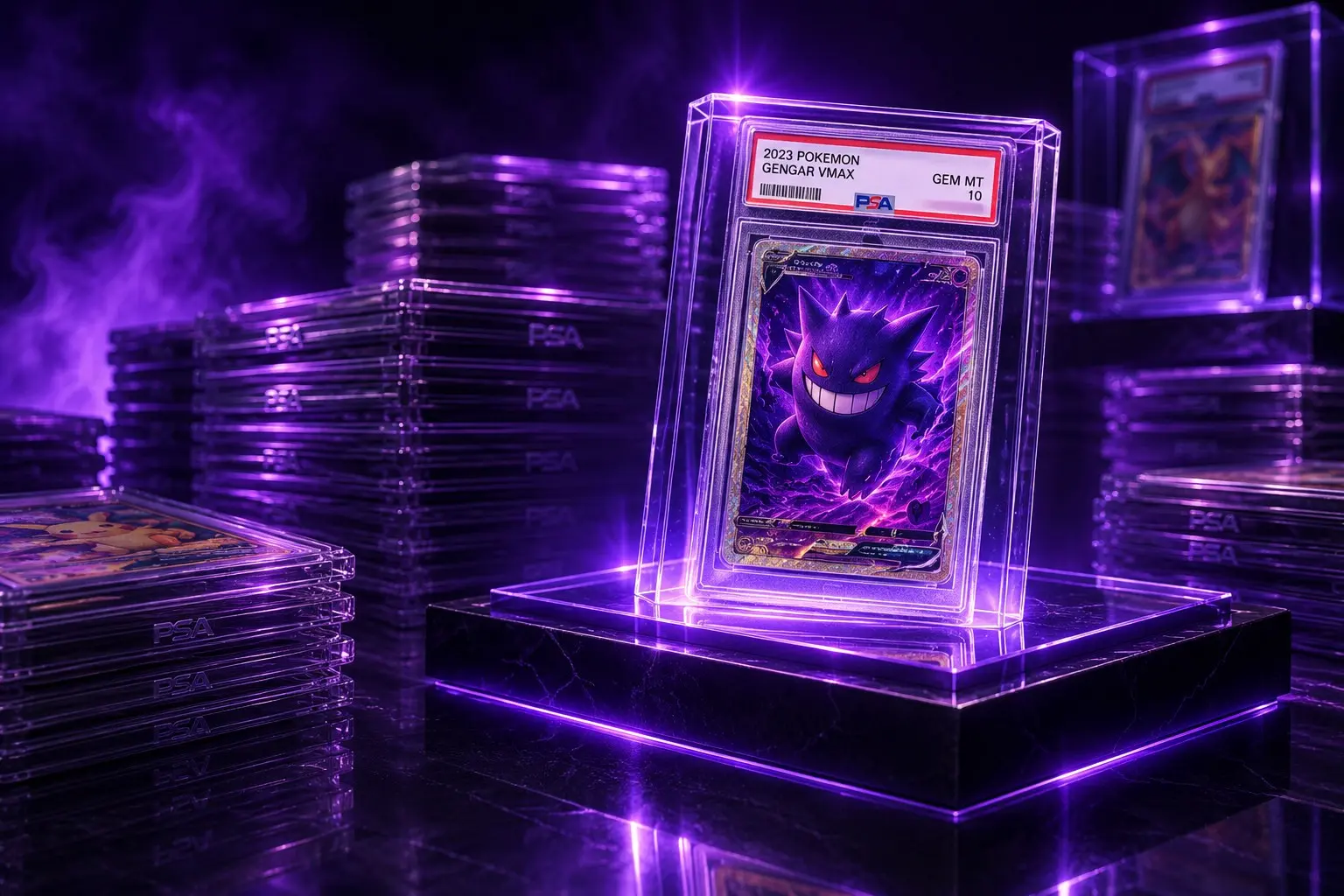
PSA grades cards from 1 to 10. A PSA 10 Gem Mint is a near-perfect card. A PSA 9 Mint has one small flaw. Below that, each grade allows more wear: whitening, scratches, soft corners and creases. The price gap between grades is large, especially between 9 and 10.
The scale
| Grade | Name | What it allows |
|---|---|---|
| 10 | Gem Mint | Sharp corners, clean edges, no surface flaws, centering within about 55/45 on the front |
| 9 | Mint | One minor flaw, such as a tiny bit of edge wear or slightly off centering |
| 8 | Near Mint-Mint | Slight wear on corners or edges, minor surface marks |
| 7 | Near Mint | Light wear visible on close look, light scratches |
| 6 | Excellent-Mint | Visible wear on corners and edges, some surface wear |
| 5 | Excellent | Rounding corners, noticeable wear, small creases possible |
| 4 | Very Good-Excellent | Clear wear, light creases |
| 3 | Very Good | Heavier wear and creasing |
| 2 | Good | Major wear, creases, staining |
| 1 | Poor | Heavy damage, but the card is complete |
PSA also gives half grades from 1.5 to 8.5, for cards between two whole grades. There is no PSA 9.5. PSA's full grading standards describe each grade in detail.
What graders look at
Four things decide a grade:
- Centering. How even the borders are, front and back.
- Corners. Sharp, or soft and white.
- Edges. Whitening or chipping, especially on the back.
- Surface. Scratches, print lines, dents and holo wear.
A card is only as good as its worst area. Perfect corners will not save a scratched holo. Our condition guide shows how these line up with raw grades like Near Mint and Lightly Played.
The price gaps
Across the cards we track, a PSA 10 sells for about 3.7 times a PSA 9 on average, a 9 for about 1.6 times an 8, and an 8 for about 1.5 times a 7. The jump to 10 is where the money is.
The gap is even bigger on cards that rarely get a 10. On cards where under 10% of graded copies are 10s, a PSA 10 sells for about 12.5 times a 9 in our data. Where most copies get 10s, the multiple drops to about 2.4.
Here is Base Set Blastoise, Unlimited holo:
| Grade | Price |
|---|---|
| PSA 7 | $250 |
| PSA 8 | $310 |
| PSA 9 | $870 |
| PSA 10 | $7,803.88 |
Qualifiers
A PSA label sometimes adds a letter code next to the grade, such as OC (off-center), ST (staining), PD (print defect) or MK (marks). A qualified card has one specific problem but is otherwise in better shape than its number. Qualified slabs sell for much less than the same grade without a qualifier, and some collectors avoid them entirely.
Authentic
A slab marked Authentic means PSA confirmed the card is real but did not give it a number, usually because it was altered or trimmed.
Should you grade?
That depends on the gap between your card's raw price and its likely graded price, minus the fee. Our guide to the cost to grade Pokémon cards walks through the math, and how to get cards graded covers the steps.

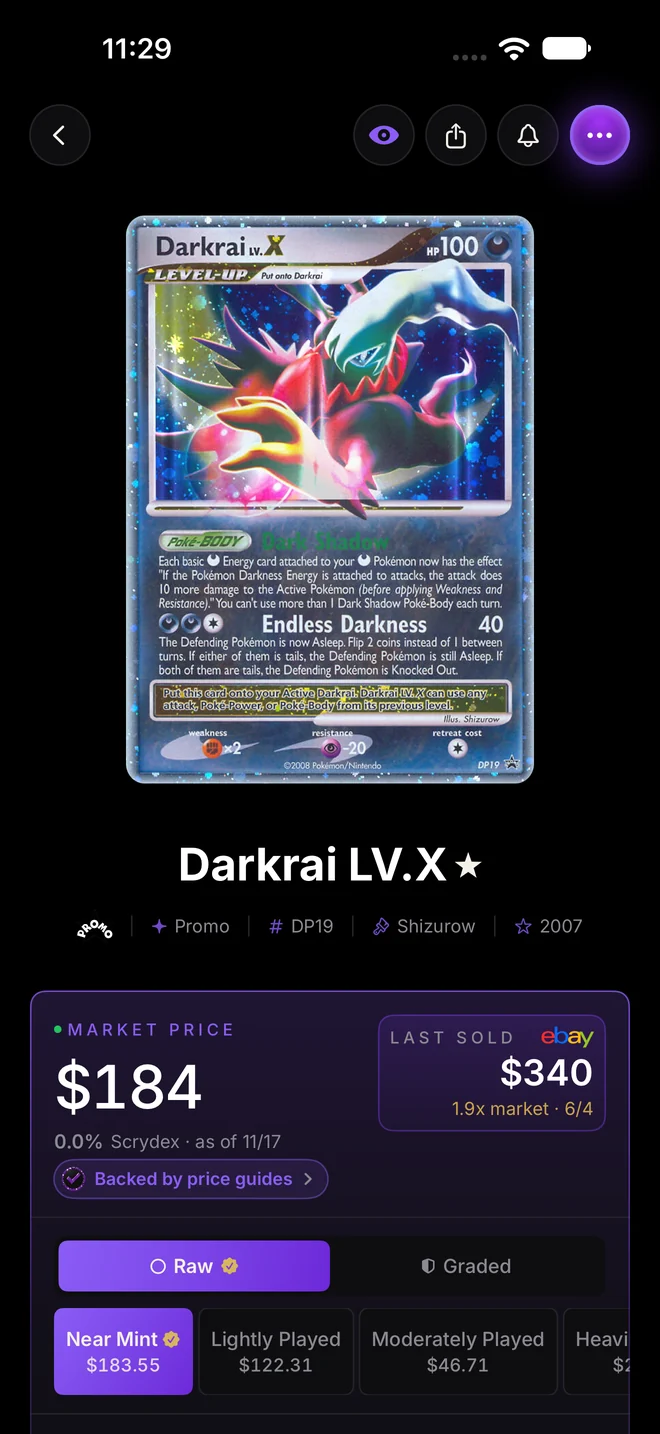
Every card page in Masterball shows the price at each grade, from raw through PSA 10 and the other companies, so you can see the gap before you decide.