To get a Pokémon card graded, pick the cards worth grading, choose a grading company and service tier, fill in the submission online, pack the cards in semi-rigid holders, and ship them tracked and insured. A few weeks to a few months later, they come back sealed in slabs with a grade.
Step 1: Pick the right cards
Not every card is worth grading. Send a card if:
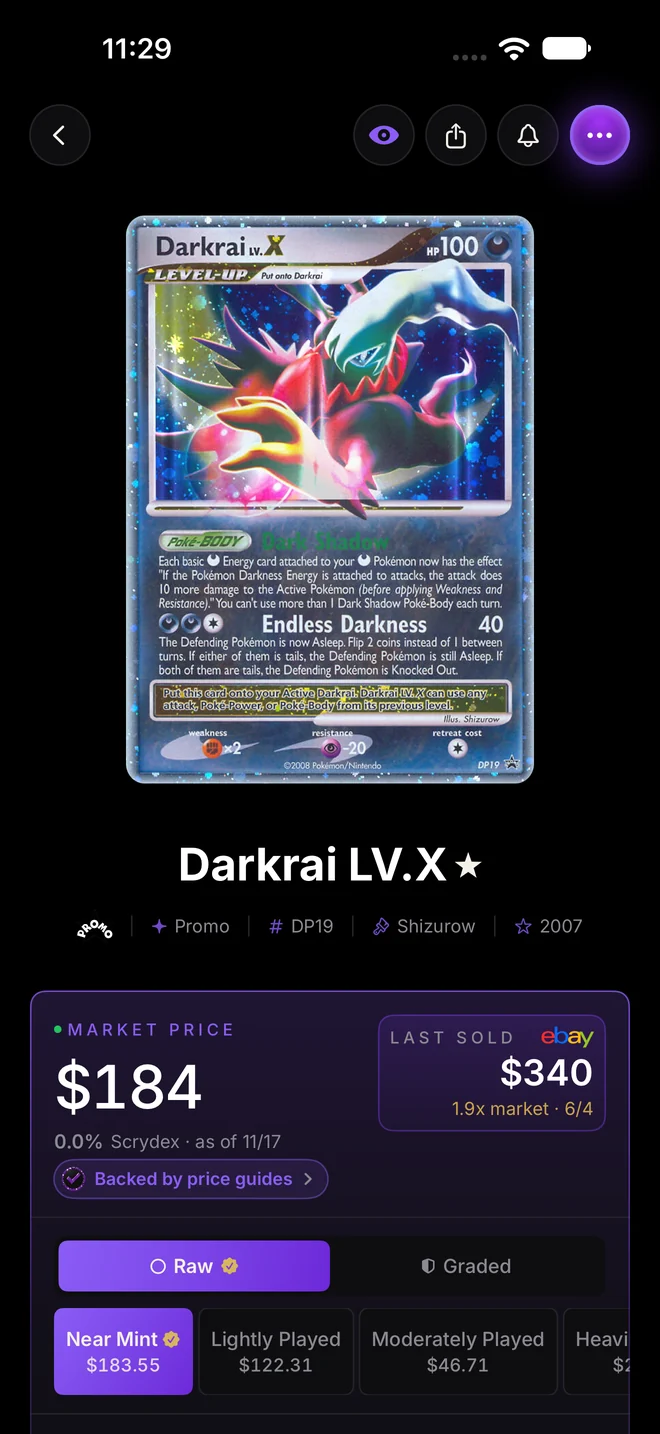
- Its graded price is clearly higher than its raw price plus the full grading cost.
- It is in very good condition, with sharp corners, clean edges and good centering.
- You want it protected and authenticated, for a valuable card you plan to keep.
Our guide to the cost to grade Pokémon cards walks through the math, and the PSA grading scale guide explains what graders look for.
Step 2: Check condition yourself
Before you pay to grade, look at every card under a bright light:
- Centering. Compare the borders left to right and top to bottom, front and back.
- Corners. Any white or soft corners will lower the grade.
- Edges. Check the back edges for whitening.
- Surface. Tilt the card under the light to find scratches, dents and print lines.
Our condition guide has photos and descriptions of each problem. Be strict. Most cards that look perfect at a glance have a flaw up close.
Step 3: Choose a company and tier
PSA, CGC, BGS, SGC and TAG all grade Pokémon cards. PSA slabs usually sell for the most, CGC is the cheapest place to start, and TAG and BGS have their own followings. Our comparison of PSA vs CGC vs BGS vs SGC vs TAG covers the differences.
Each company has tiers by declared value and speed. You pay more for higher-value cards and faster turnaround. Declare the card's realistic value graded, not raw, or you may be charged an upcharge later.
Step 4: Submit online
All the major companies take submissions through their websites. You create an account, pick the tier, enter each card (set, number, name, year), and pay. The site gives you a submission number and a packing slip to print.
Step 5: Pack the cards
- Put each card in a clean penny sleeve.
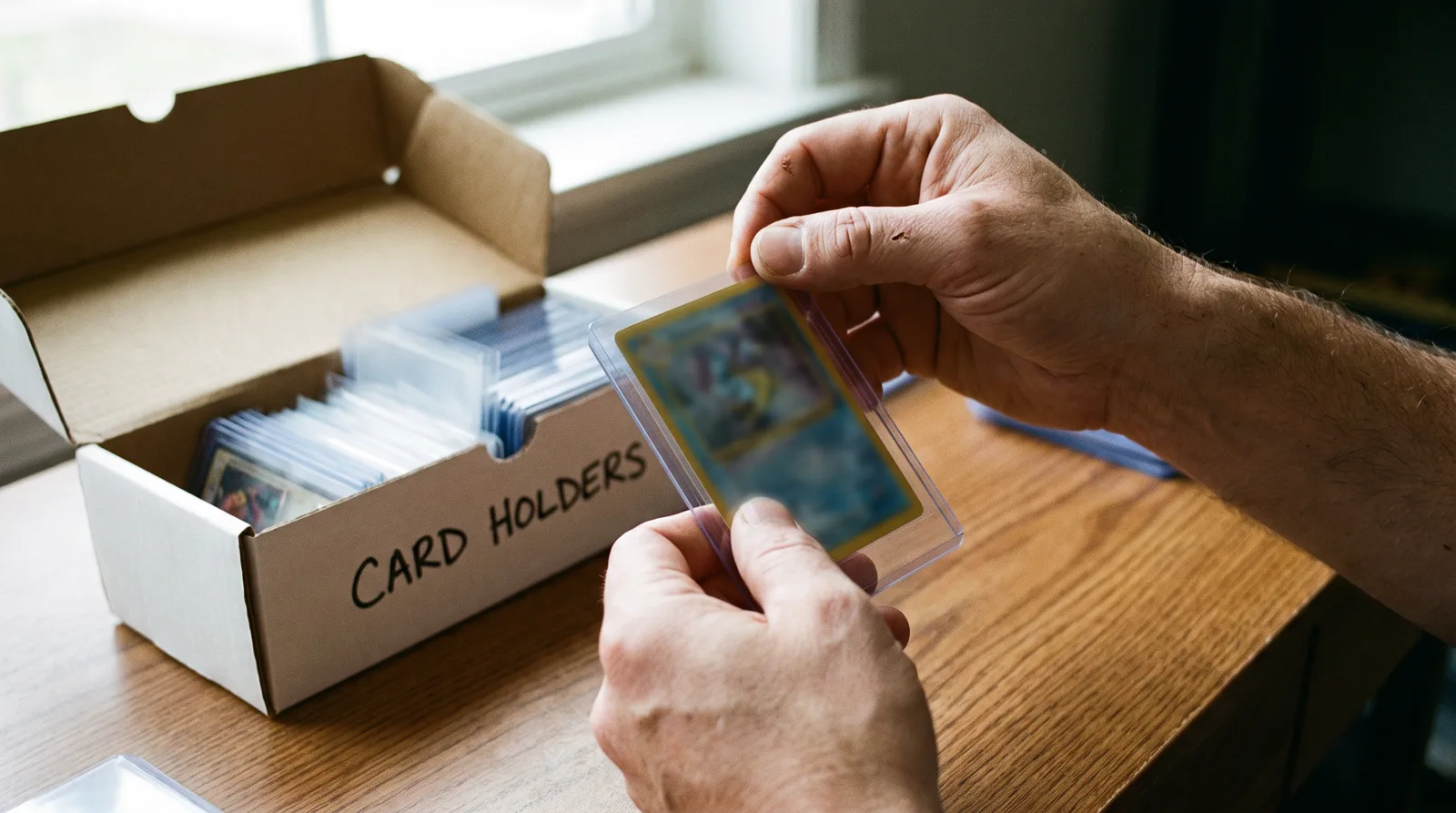
- Slide it into a semi-rigid holder (Card Saver), not a hard toploader. Most graders prefer semi-rigids.
- Group the holders with a rubber band or team bag, in the same order as your submission form.
- Sandwich them between pieces of cardboard so nothing can bend.
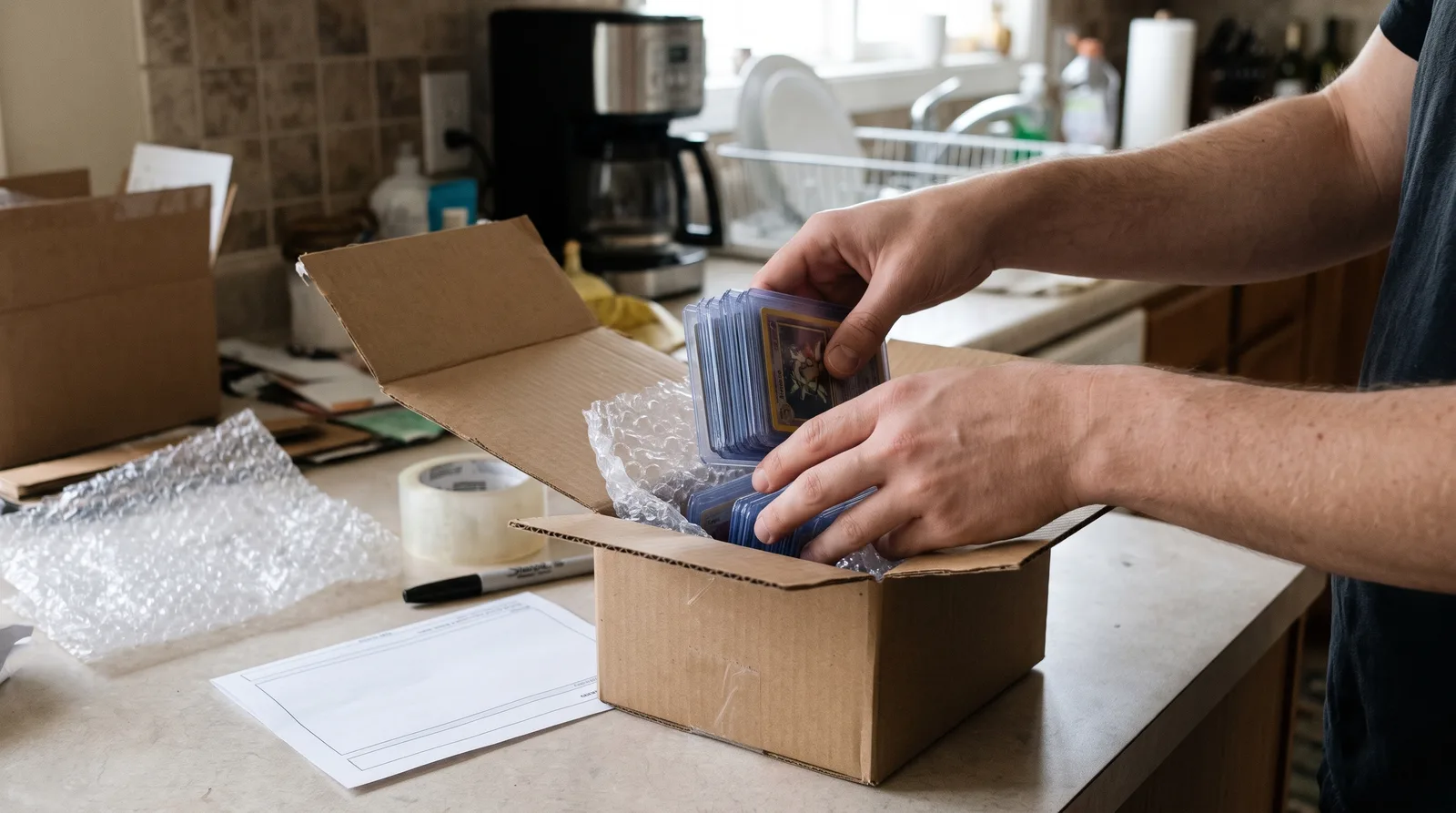
- Put the stack in a sturdy box with packing material, and add the printed slip.
Step 6: Ship it
Use a tracked, insured service, and insure for the full declared value. Keep the tracking number and photos of every card before it goes in the box.
Step 7: Wait, then check the results
Turnaround times change constantly with demand, from a few weeks to several months. You can track your order on the company's site. When the grades post, check each card against your expectations. If a slab comes back with a mistake on the label, contact the company.
After grading
Look up each cert number on the company's site to confirm it is registered. Store slabs upright in a slab box, out of the sun. If you are selling, our guide to where to sell Pokémon cards compares the options.

Masterball Premium shows the cards in your collection most worth grading, ranked by the likely gain after fees, and adds the slab to your collection with its grade when it comes back.