How much is your Pokémon card worth? It is worth what the same card, in the same printing and the same condition, has recently sold for. Not what someone is asking for it, and not what a different version of it sold for. Get those three things right and the price usually finds itself.
Most people searching for a card's value make one of three mistakes. They look at the wrong printing, they compare a played card to mint sales, or they trust an asking price. The five steps below avoid all three.
Step 1: Find the exact card
Every Pokémon card has two numbers in the bottom corner, like 2/102. The first is the card's number, the second is how many cards are in the main set. Next to it is a small set symbol. Those two things together tell you which card you have.
Names are not enough. There are dozens of cards called Charizard and Pikachu, and they range from a few cents to seven figures. Search by name, set and number together, for example "Blastoise Base Set 2/102".
Step 2: Find the printing
This is where most valuations go wrong. Many cards were printed more than once, and each printing is its own price.
- 1st Edition cards carry a small black "Edition 1" stamp on the left under the art.
- Shadowless Base Set cards have no drop shadow on the right side of the art box.
- Reverse holo cards have the foil on the card body instead of the picture.
- Promos, stamps and jumbos are separate cards, even when the art matches.
Here is how much printing matters, using Base Set Blastoise graded PSA 9:
| Printing | PSA 9 market price |
|---|---|
| Unlimited Holo | $870 |
| Shadowless Holo | $3,500 |
| 1st Edition Holo | $11,250 |
Same card, same grade, a 13x difference. Our guide to Base Set 1st Edition, Shadowless and Unlimited shows how to tell them apart in a few seconds.
Step 3: Be honest about condition
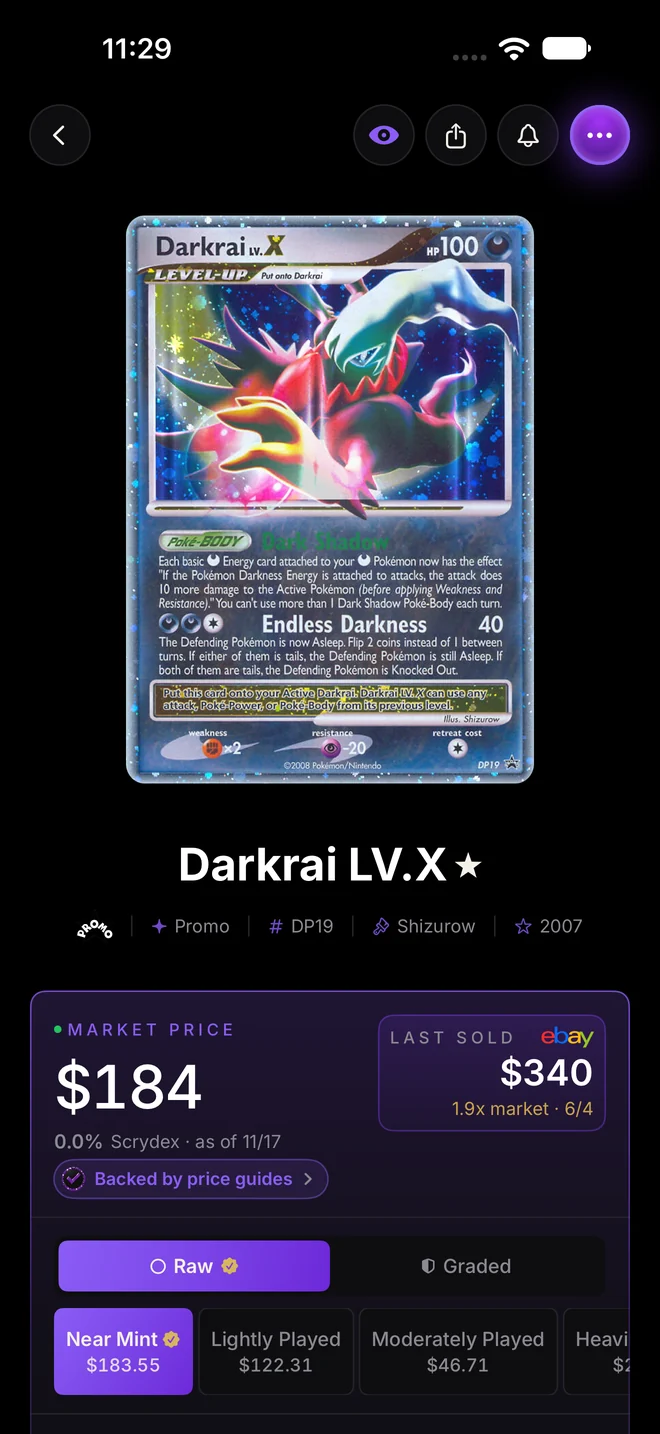
Raw cards are priced by condition: Near Mint, Lightly Played, Moderately Played, Heavily Played and Damaged. The gap between them is wide. Base Set Blastoise, Unlimited Holo, raw:
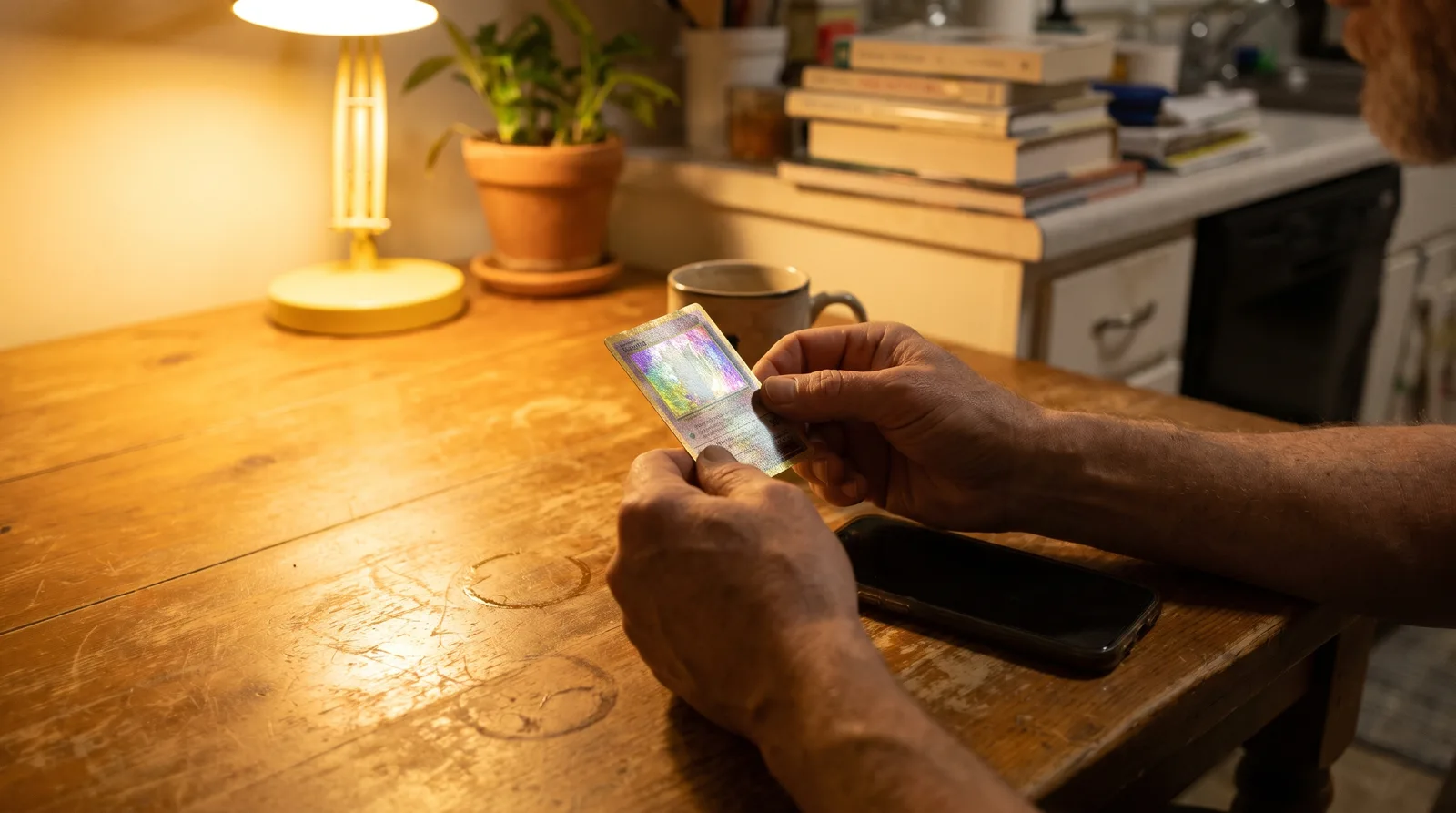
Hold the card under a bright light and tilt it. Look at the four corners, the edges on the back, and the surface for scratches. If you can see whitening on the back edges without trying, it is not Near Mint. Our condition guide walks through each grade with examples.
Step 4: Read sold prices, not asking prices
A listing at $500 tells you what one seller hopes for. A sale at $300 tells you what a buyer paid. Only the second one is the value.
Look at the last several completed sales for your exact printing and condition. One sale can be a fluke in either direction. Three or more that agree is a price you can lean on. On eBay, use the "Sold items" filter. Watch for lots, damaged cards and wrong printings mixed into the results, because they drag the numbers around.

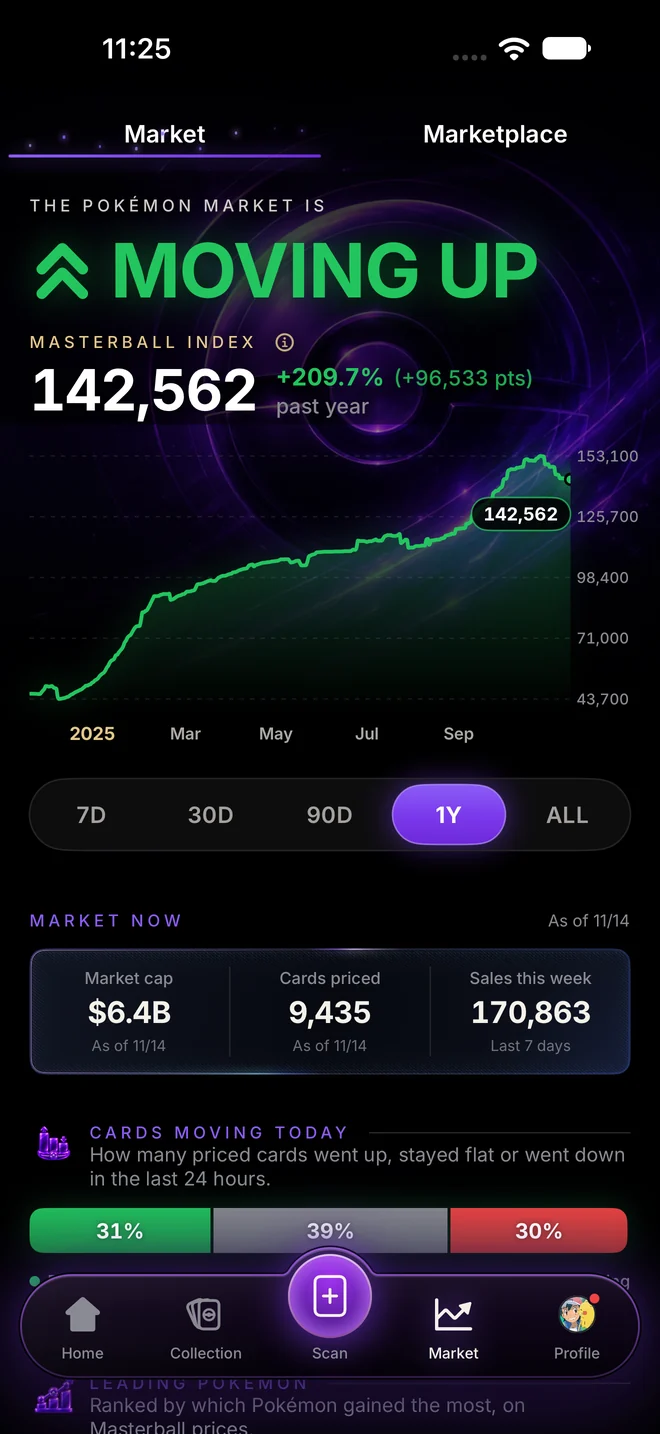
On every card page in Masterball, the price is built from recent completed sales for that exact printing and grade, with the sales listed underneath so you can check them yourself. You can see how it works in how Masterball prices a card.
Step 5: Decide raw or graded
Graded cards and raw cards are different markets. A graded card's price depends almost entirely on the number on the slab. For a newer chase card like Delta Reign's Mega Rayquaza ex, the jump looks like this:
| Version | Market price |
|---|---|
| Raw, Near Mint | $299 |
| PSA 9 | $401 |
| PSA 10 | $1,550 |
That PSA 10 figure is not your card's value unless your card comes back a 10. Most cards do not. If you are thinking about grading, read is your Pokémon card worth grading? first.
When a card has very few sales
Some cards trade a handful of times a year. In that case, look at the same card in the grade just above and just below yours, and at how long ago the last sale was. A price from eight months ago is a starting point, not an answer. Thin markets also move more on a single sale, so expect a wider range.
The short version
Name, set and number to find the card. The stamp, shadow and foil to find the printing. A bright light to judge the condition. Then the last few sold prices for that exact combination. Prices in this guide are as of November 18, 2026, and every card linked here shows today's figure.