
Every Pokémon card has a small rarity symbol in the bottom corner. A circle means Common, a diamond means Uncommon, and a black star means Rare. Modern cards add more stars in black, silver and gold to mark the rarer cards above that.
The symbol is printed next to the card number, usually in the bottom left on modern cards and the bottom right on older ones.
The basic three
These have been on Pokémon cards since 1999:
| Symbol | Rarity | What it usually is |
|---|---|---|
| ● Circle | Common | Basic Pokémon, simple Trainers |
| ◆ Diamond | Uncommon | Stage 1 Pokémon, better Trainers |
| ★ Black star | Rare | Stage 2 Pokémon, holo rares |
A black star does not tell you whether the card is holo. On older sets, the holo and non-holo rares both use a black star. Our guide to holo vs reverse holo explains how to tell them apart.
Promo cards
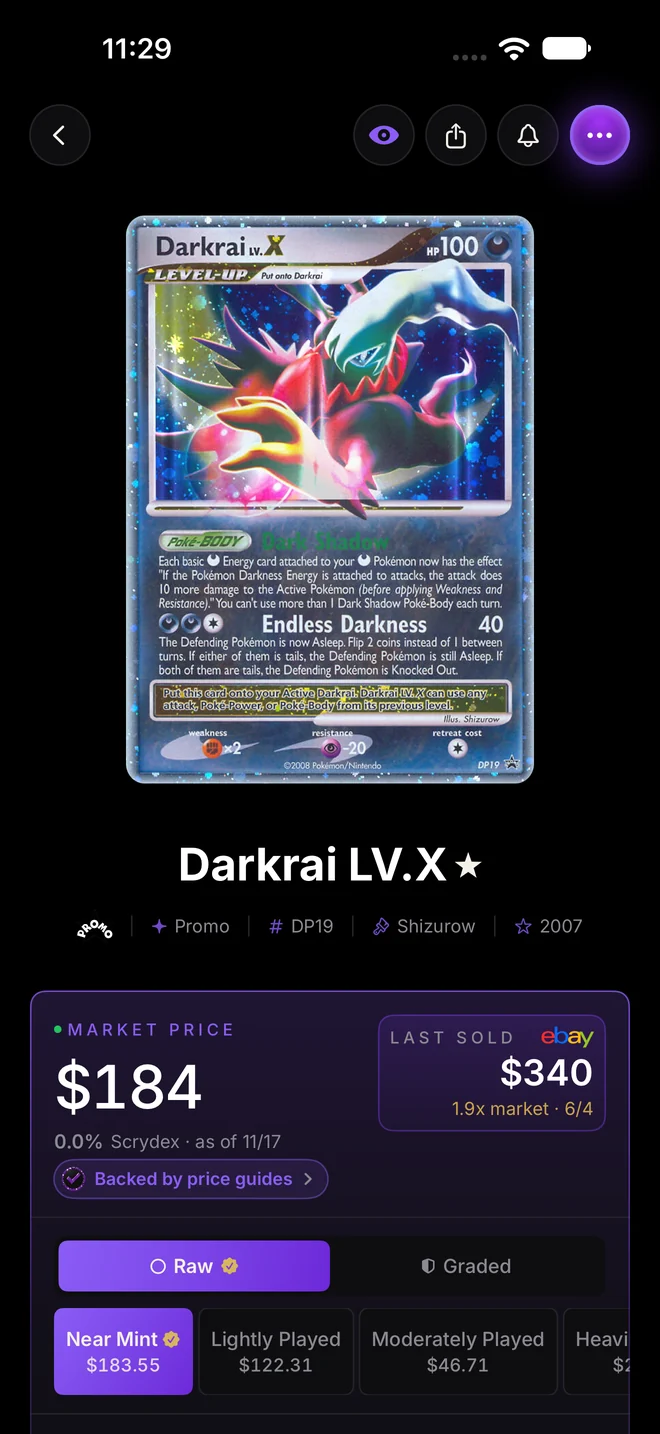
Promos use a black star with the word PROMO on it. They come from boxes, tins, events and other products rather than booster packs, and they have their own numbering, like SWSH144 or SVP 085.
Modern rarity symbols
Starting with Scarlet & Violet in 2023, Pokémon added a ladder of star symbols for the cards above Rare:
| Symbol | Rarity |
|---|---|
| ★★ Two black stars | Double Rare (Pokémon ex) |
| ★★ Two silver stars | Ultra Rare (full art cards) |
| ★ One gold star | Illustration Rare |
| ★★ Two gold stars | Special Illustration Rare |
| ★★★ Three gold stars | Hyper Rare (gold cards) |
A few more show up in some sets:
- Hollow gold star: Shiny Rare.
- Magenta star: ACE SPEC Rare, a powerful Trainer limited to one per deck.
- Mega Hyper Rare: the top rarity in the Mega Evolution sets, used for the rarest gold Mega ex.
CGC's rarity guide lists the full set if you want to check a specific symbol.
Gold stars that are not rarity symbols
Don't confuse the modern gold-star rarity symbol with Gold Star cards, which are a set of 27 vintage cards from 2004 to 2007 with a gold star printed next to the Pokémon's name. They are some of the most valuable cards in the hobby. Our Gold Star guide covers all of them.
Does rarity decide price?
Partly. A Special Illustration Rare is almost always worth more than a common from the same set. But within a rarity, price depends on the Pokémon, the art, and demand. A popular Pokémon's Illustration Rare can sell for more than a less loved Pokémon's Special Illustration Rare.
Condition matters as much as rarity. A Rare in heavily played condition can be worth less than an Uncommon in perfect shape. Our condition guide explains the grades.
Japanese rarity codes
Japanese cards use letter codes instead of symbols: C, U, R, RR, AR, SR, SAR, UR and others. Our guide to Japanese vs English cards has a table that lines them up with the English names.

Scan a card with Masterball and it shows the rarity, the set, and what that exact printing sells for. It saves squinting at a tiny symbol.