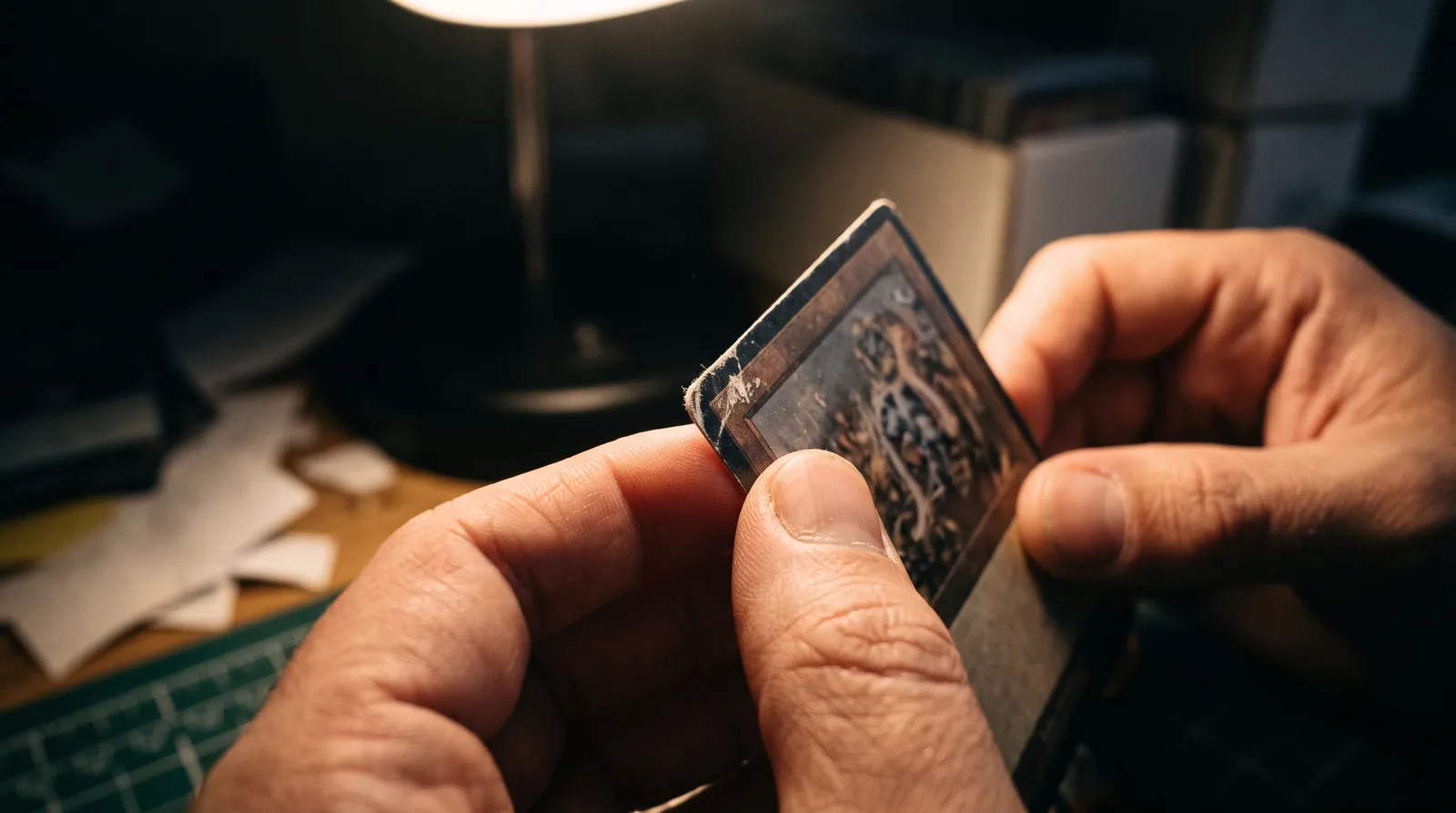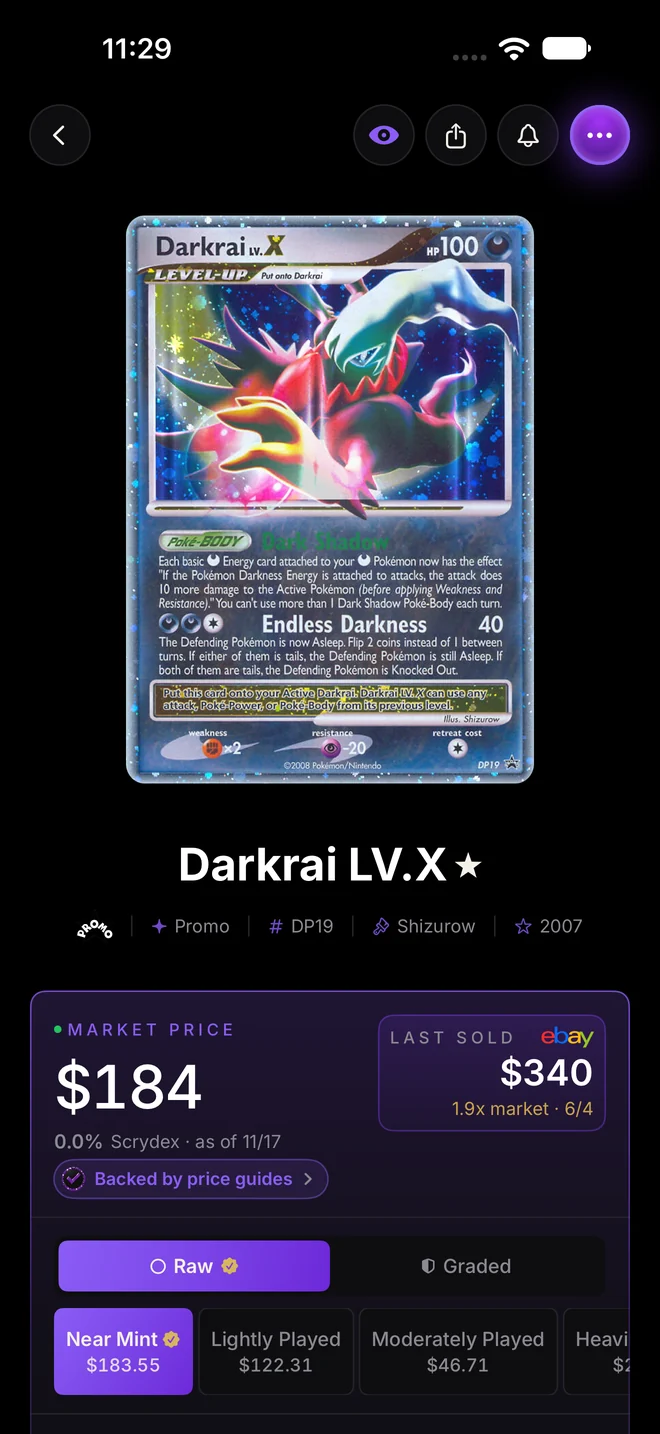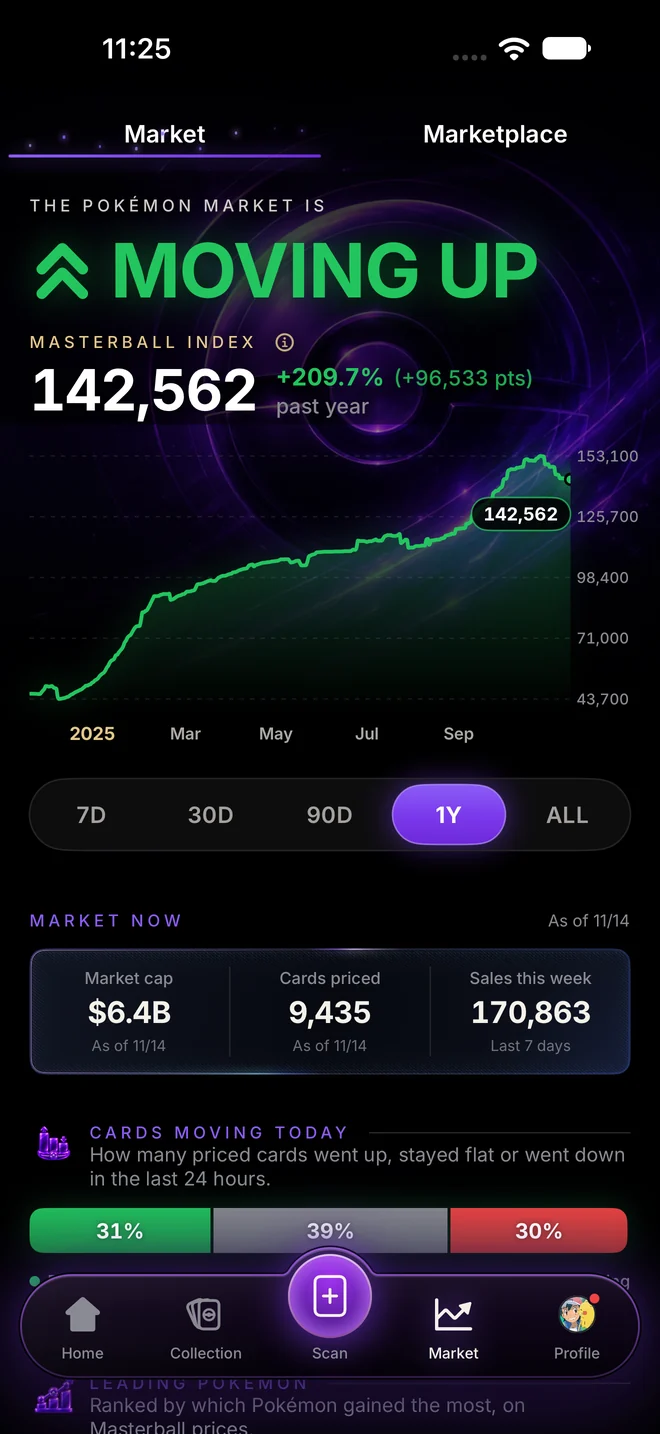
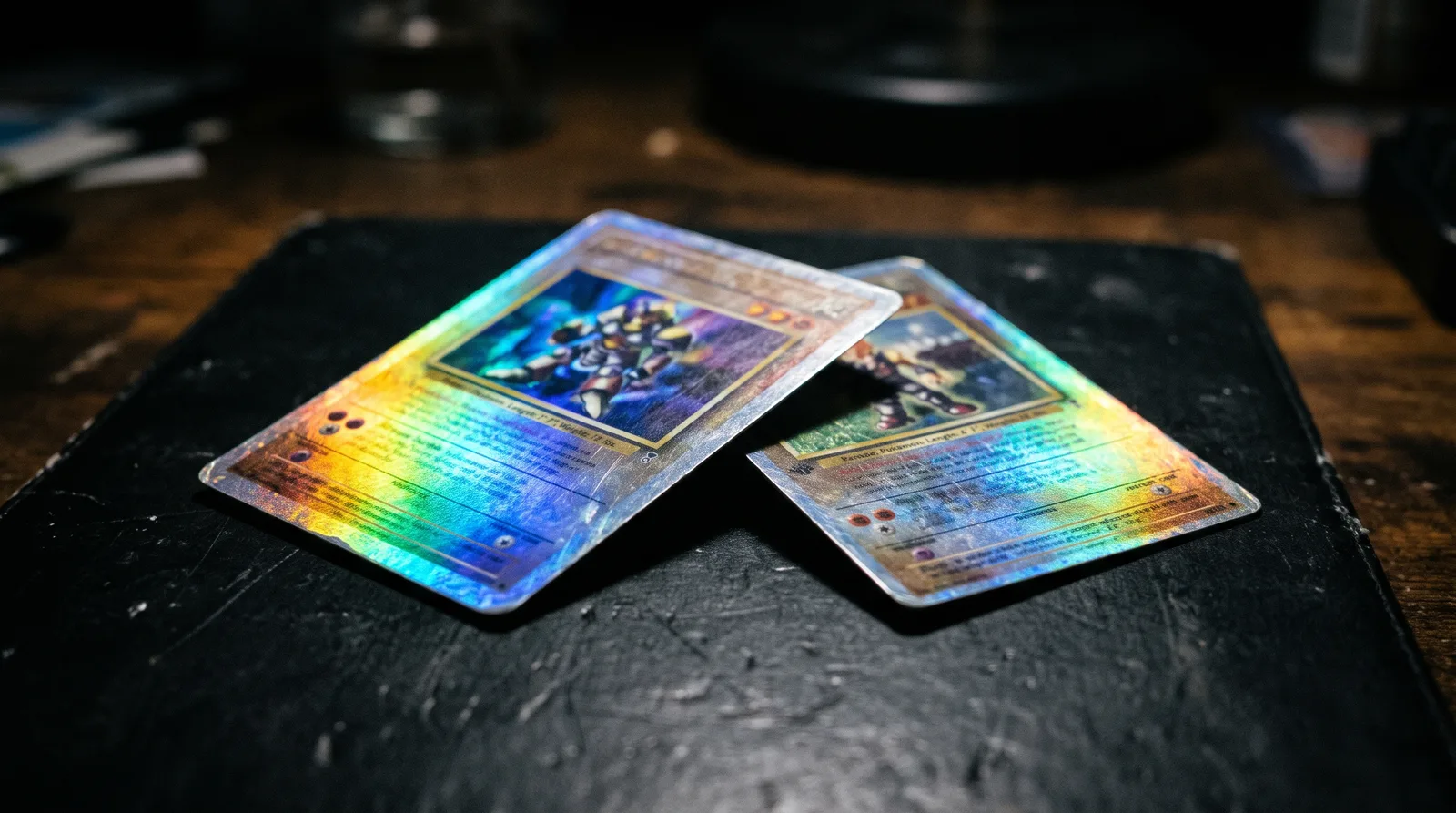
On a holo card, the shiny foil is inside the picture box, behind the Pokémon. On a reverse holo, the foil covers the rest of the card, and the picture itself is flat. Most of the time the holo is worth more. But on some older sets, like Legendary Collection, the reverse holo is the rare one and worth far more.
How to tell them apart
Tilt the card under a light:
- Holo: the art box shines. The border, text box and background around it are flat.
- Reverse holo: the art box is flat. Everything around it shines.
There is also the non-holo version of many rares, where nothing shines at all.
By era
Base Set to Neo (1999–2002). Holo rares have a starburst or "cosmos" foil behind the Pokémon. English reverse holos did not exist yet.
Legendary Collection (2002). The first English set with reverse holos. Its reverse foil is a fireworks pattern that covers the whole card outside the art. These are some of the most sought-after cards of the era.
e-Card and later. Reverse holos became standard in packs, usually one per pack. Our guide to the e-Card era covers those sets.
Modern sets. Nearly every common, uncommon and rare comes in a reverse holo version too. Pokémon ex and the ultra rares above them are usually holo only. Some sets add special reverse patterns, like Poké Ball or Master Ball designs.
Which is worth more?
On modern sets, reverse holos of commons and uncommons are usually worth a little more than the regular version, but not much. On older sets, the story can flip completely.
Here is Legendary Collection Charizard, from our data:
| Holo | Reverse holo | |
|---|---|---|
| Raw, Near Mint | $664.78 | $1,610.96 |
| PSA 9 | $3,120 | $20,401.20 |
| PSA 10 | $8,773.20 | $468,000 |
The reverse holo PSA 10 sells for more than 50 times the holo. On October 11, one sold for $660,000 at Fanatics. The fireworks foil scratched easily and the cards were hard to pull, so top-grade copies are scarce.
Why it matters when you price a card
Holo and reverse holo versions share the same number and the same art. A price lookup that does not ask which one you have can be wrong by a factor of ten or more. When you check a value, make sure you are looking at the right version. Our guide to what your card is worth covers the other details that matter.
Master sets
If you collect complete sets, reverse holos are what turn a set into a master set. Our guide on how to complete a master set explains how to plan for them.

On each Masterball card page, the printing picker shows holo, reverse holo and any other versions side by side, each with its own price by grade.