The best way to store Pokémon cards is simple: a soft sleeve on every card worth keeping, a rigid holder on anything valuable, and everything kept flat, dry, cool and out of sunlight. Most damage to cards happens slowly, from storage that looked fine.
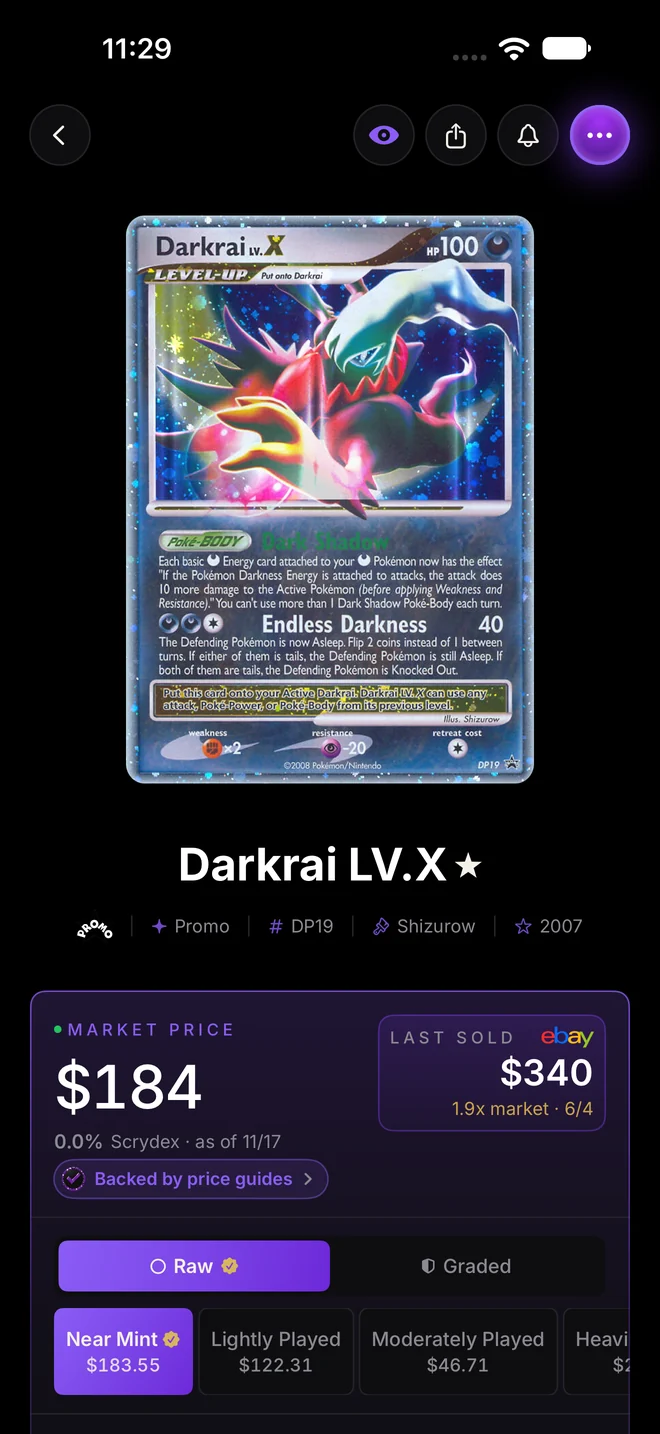
Condition decides a card's price. A Near Mint card can be worth two or three times the same card Lightly Played, so the few cents a sleeve costs is the cheapest protection you will ever buy.
Sleeve first, always
A penny sleeve is a thin, soft plastic sleeve. It stops scratches on the surface and scuffs on the back when cards slide against each other. Slide the card in from the top, carefully, so a corner does not catch on the sleeve's edge.
Every card you would be upset to damage goes in a sleeve. Bulk commons can live in a box without them.
Toploaders and semi-rigids for anything valuable
A toploader is a rigid plastic holder. Sleeve the card first, then slide it in. It stops bends, which are the one kind of damage you can never undo.
A semi-rigid holder is the slimmer, softer cousin. It is what most grading companies prefer you send cards in, because cards come out of them easily without catching a corner.
- Use a toploader for storage and for posting a card.
- Use a semi-rigid when you are preparing a card for grading.
- Never force a card into a holder that is too tight.
Binders: the right kind matters
A good binder is the nicest way to keep a collection you look at often. A bad one dents cards.
- Use side-loading pockets. Cards are less likely to fall out and dust stays out.
- Avoid ring binders for valuable cards. The rings press into the cards on the pages nearest the spine and leave dents.
- Do not double up. One card per pocket, or two back to back at most, both sleeved. Overstuffed pages bow.
- Store binders upright, like books on a shelf. A binder lying flat under a pile of others can warp the cards inside.
Zip binders with a full wraparound zip keep dust and bugs out better than open-sided ones.
Boxes for everything else
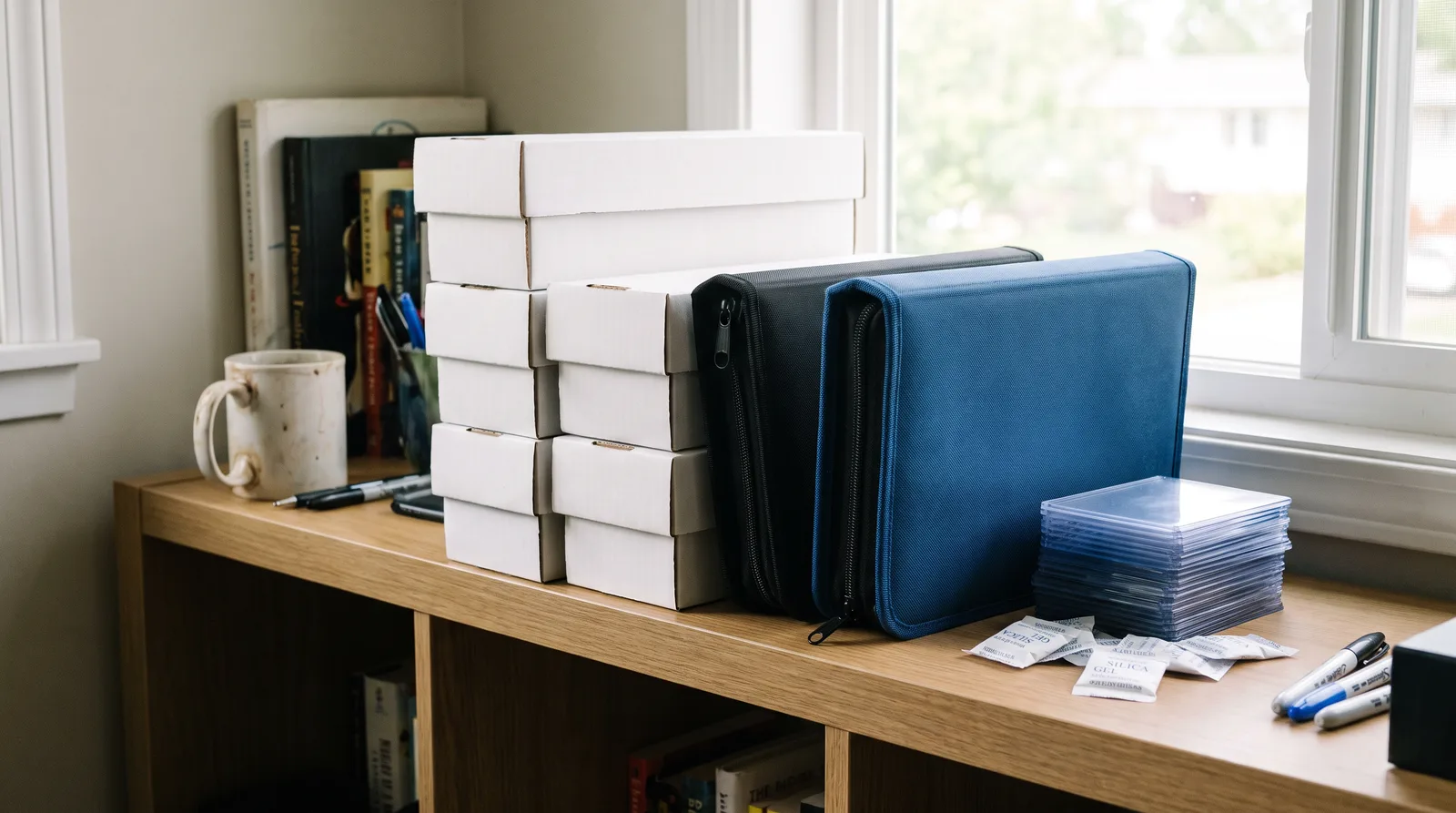
Cardboard storage boxes made for trading cards are the standard for bulk. Fill them so the cards stand up without leaning, and use dividers so you can find sets later. A box that is half empty lets cards slump and curl. A box packed too tight bends the edges.
Light, heat and humidity
These three do the most damage, and they do it slowly.
- Sunlight fades ink and yellows sleeves. Keep cards away from windows, even on a shelf across the room.
- Heat warps plastic and can make holo cards curl. Attics, cars and the top of a fridge are bad places.
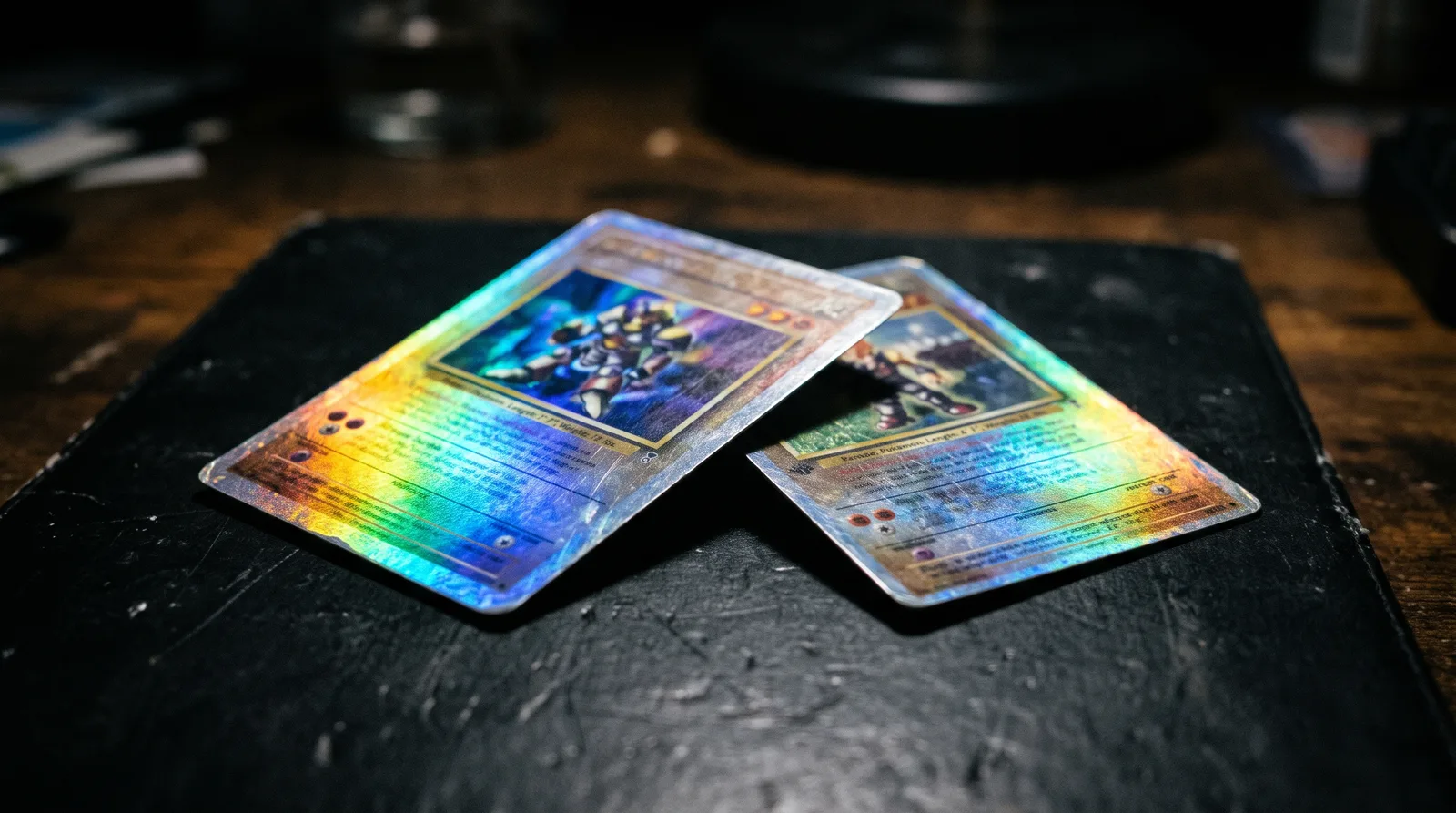
- Humidity makes cards curl and can encourage mold. Holo cards are the worst for curling, because the foil layer reacts differently from the paper. A cool room with steady, moderate humidity is the goal. A small silica gel pack in a storage box helps in damp climates.
Basements and garages are the most common places cards get ruined. They are damp, and the temperature swings.
Things that damage cards
- Rubber bands. They bend the cards on the outside of the stack.
- Paper clips and tape. They leave marks that never come out.
- Shuffling valuable cards unsleeved. It scratches surfaces fast.
- Stacking heavy things on top of boxes or binders.
- Handling cards with food, lotion or anything wet on your hands.
Sealed product
Keep sealed boxes upright, in their shipping cases if you have them, away from light. Plastic wrap can tear and box corners crush easily. If you plan to hold sealed product for years, an acrylic case pays for itself.

If you are building a collection worth keeping track of, Masterball lets you sort cards into digital binders that match your real ones, with the value of each binder updated as prices move.
A simple setup for most collectors
- Penny sleeve on every card worth more than a dollar or two.
- Toploader on every card worth more than about $20.
- A side-loading zip binder for the cards you like to look at.
- Cardboard boxes with dividers for bulk.
- All of it in a cool, dry room, out of direct light.
That covers most collections. If a card is worth grading, store it in a sleeve and semi-rigid until you send it off. Our guides on card condition and whether a card is worth grading are the next stops.