Most fake Pokémon cards fail one of six quick checks: the light test, the font, the card back, the holo pattern, the surface texture, or the feel when you flex it. You do not need special tools. You need a real card from the same era to compare against, and about a minute.
Why fakes are everywhere
Fakes follow the money. The more a card sells for, the more copies of it exist. Vintage holos like Base Set Charizard, modern chase cards, and anything sold "too cheap to be true" online are where most fakes turn up. Bulk commons are rarely faked, because it is not worth the effort.
The six checks
1. The light test
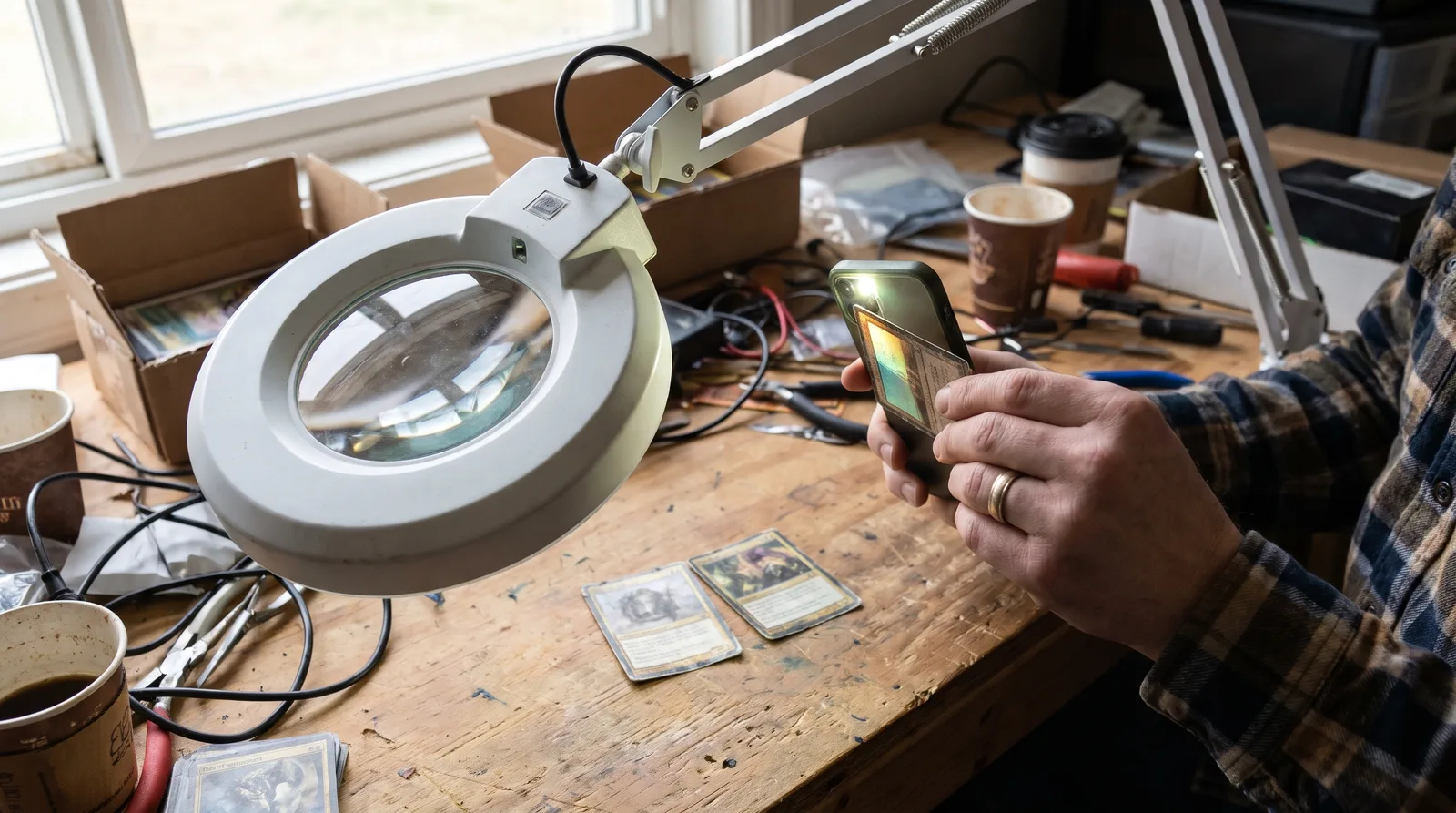
Hold the card up to a phone flashlight or a bright lamp. A real Pokémon card has a dark layer in the middle of the cardstock, so only a little light gets through and it looks dim and even. Many fakes are printed on plain card and glow brightly, or let light through in patches.
This test is not perfect. Some better fakes pass it, and some real cards from certain print runs let through more light than others. Use it with the other checks.
2. The font
Pokémon uses the same typeface family on every English card, with consistent spacing. On fakes, look for:
- HP numbers in the wrong font or the wrong size
- Attack text that is too bold, too thin, or slightly blurry
- The accent missing from "Pokémon"
- Spelling mistakes and odd wording
Put the card next to a real one from the same set. The difference is usually obvious once they sit side by side.
3. The card back
The blue back of an English card has a swirl with specific shading. On fakes, the blue is often too purple, too light, or too flat, and the edges of the swirl look soft. Japanese cards have a different back entirely, which is normal and not a sign of a fake. Our guide to Japanese vs English cards explains the difference.
4. The holo pattern
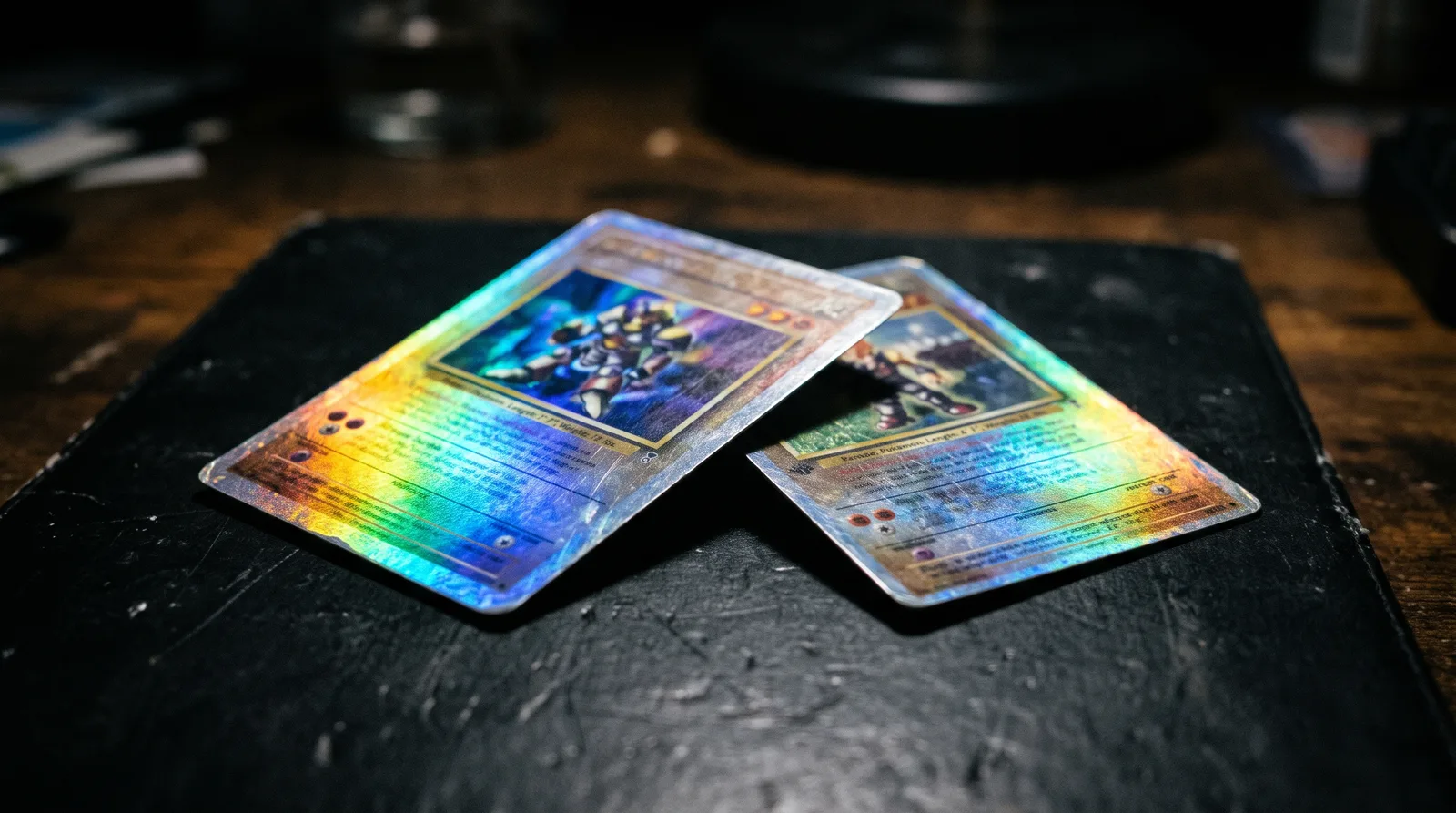
Real holo cards use specific foil patterns for each era. Vintage holos have a starburst or cosmos pattern behind the Pokémon. Modern cards have textured foil you can feel and see shift as you tilt them. Fakes often use a generic rainbow foil across the whole card, or a flat shine that does not move properly.
If you are not sure what the holo should look like, our guide to holo vs reverse holo shows the patterns by era.
5. The texture
Many modern chase cards, like Special Illustration Rares and full arts, have a raised texture you can feel with a fingertip. Most fakes are smooth. Run a finger across the card. If it should be textured and is not, be suspicious.
6. The flex
A real card bends a little and springs back. Many fakes feel stiffer, thinner, or more like paper, and some crease easily. Do not bend a card hard to test it. A gentle flex is enough, and it is the last check, not the first.
The rip test, and why not to use it
Collectors sometimes tear a card in half to see the dark core layer. It is proof, but it destroys the card. Only do it on a card you already know is fake, as a way of learning what a real one looks like inside.
Graded slabs can be faked too
Fake PSA, CGC and BGS slabs exist, especially for expensive cards. Before buying a slab, look up the certification number on the grading company's website and check that the card, grade and label details match. Look closely at the label print and the case edges too. If the seller will not show the cert number clearly, walk away.
Where fakes are most common
- Online listings priced well under market. A Gold Star or vintage holo at a tenth of its usual price is a fake or a scam almost every time.
- Bulk lots from unknown sellers. Fakes get mixed into lots of real cards.
- Cheap "mystery packs" and boxes from unofficial sellers.
Buying from local card shops and established sellers at card shows is safer, because you can check the card in hand before paying.

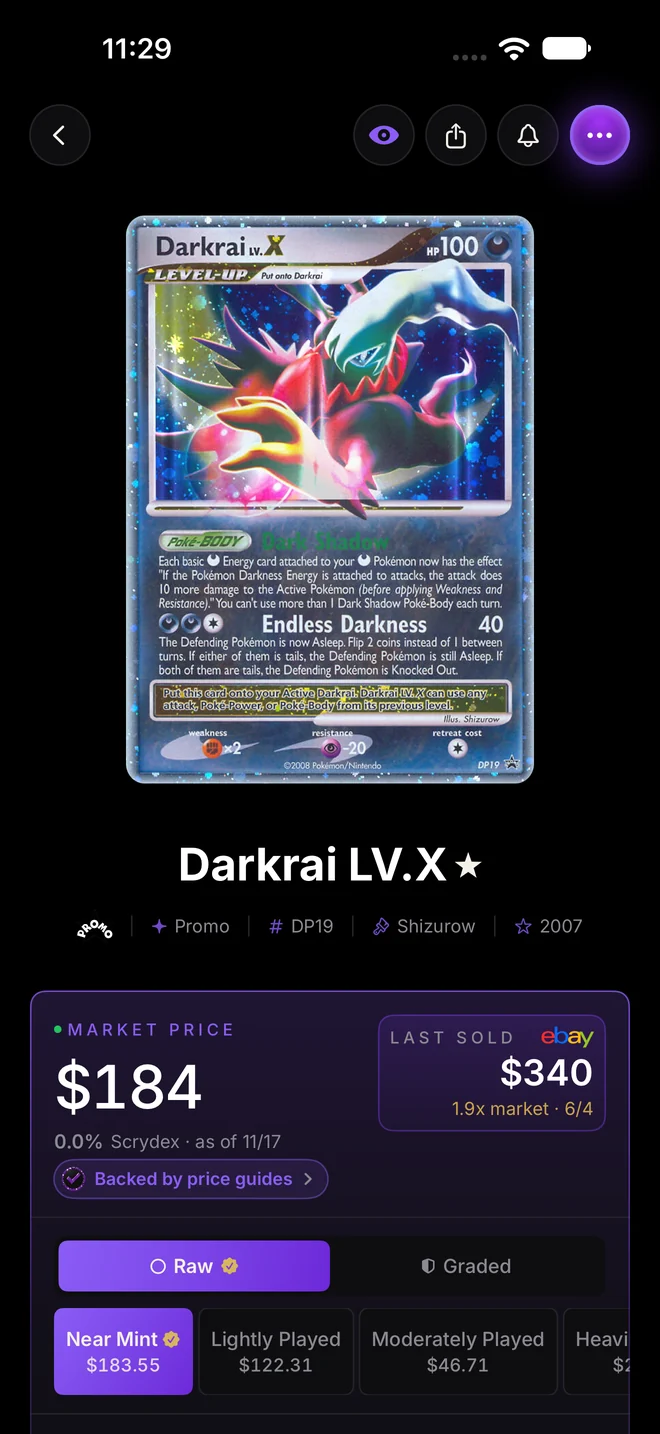
Know the price before you buy. Masterball shows what a card actually sold for recently, by grade, so a listing priced far below market stands out right away.
What to do if you bought a fake
Contact the seller first. If you bought on eBay or TCGplayer, open a case: both platforms usually side with buyers on counterfeits. Keep your photos and messages. And keep the fake clearly marked, so it never ends up back on the market.